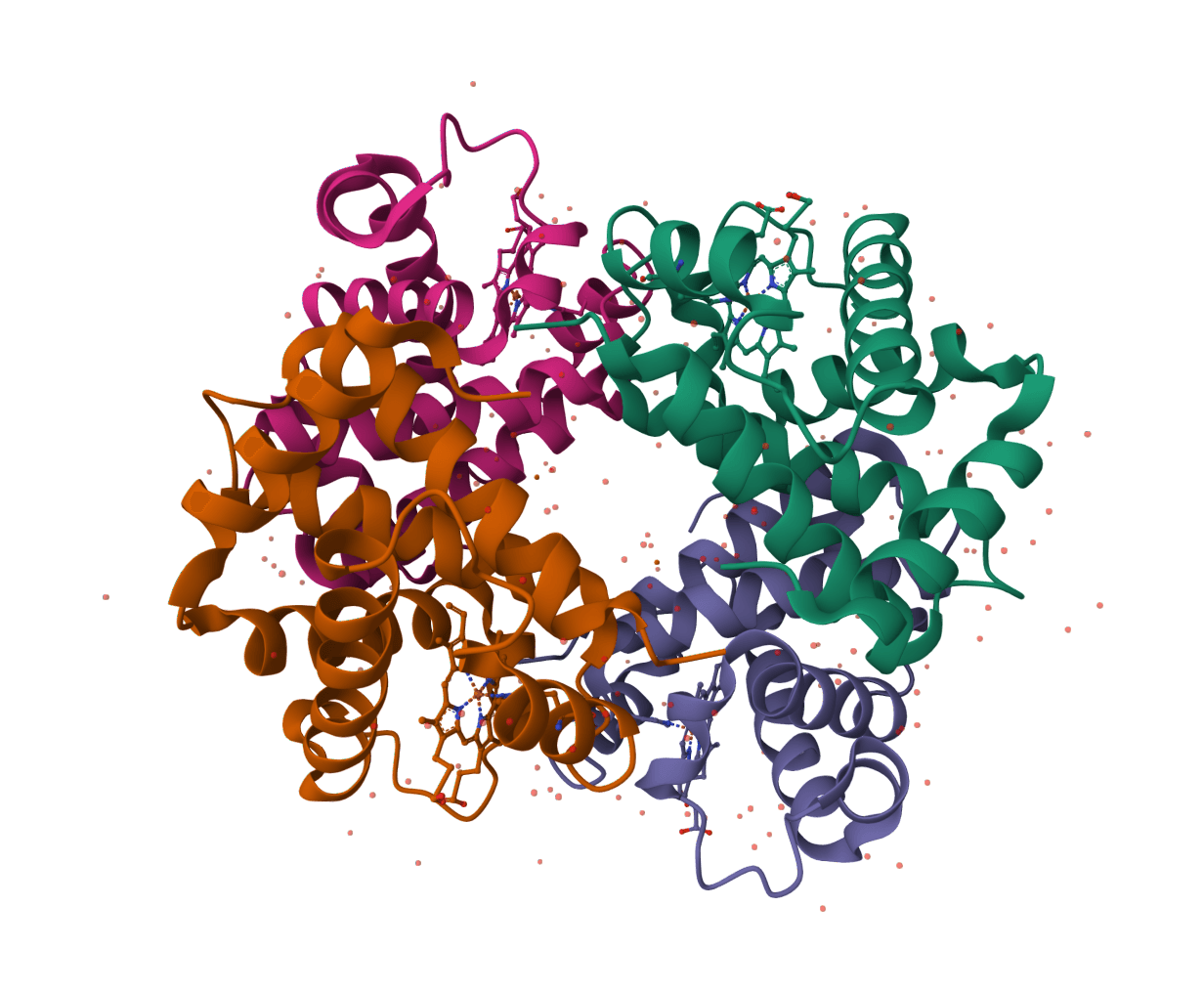
Fetch InterPro entry JSON files for protein families, domains, repeats, and sites. Learn more
Input
What is InterPro Download?
InterPro Download is a record-retrieval tool for the InterPro protein-classification resource. It fetches the JSON entry behind a stable InterPro accession, such as IPR000719, rather than running a sequence annotation. InterPro integrates predictive signatures from its member databases to describe protein families, domains, sites, repeats, and homologous superfamilies.
An entry record is useful when a report, annotation table, or analysis workflow already contains an InterPro identifier and needs the associated curated context. The downloaded data can include the entry name and type, contributor signatures, descriptive text, hierarchy, linked Gene Ontology terms, cross-references, and counts for matching proteins or structures, depending on the entry.
InterPro entries represent classifications, not definitive experimental characterization of every matching protein. A family or domain label should be interpreted alongside the protein sequence, organism, architecture, and supporting evidence.
How to use InterPro Download online
ProteinIQ retrieves an InterPro entry online from its IPR accession and returns its JSON record as a downloadable file. Enter a known InterPro ID, such as IPR000719, then fetch the download to receive the entry metadata and annotations available through the InterPro API. The result is suited to record keeping, parsing, and linking an existing domain or family call to its source entry.
Input
| Input | Description |
|---|---|
Entry ID | A stable InterPro accession beginning with IPR, followed by digits. Examples include IPR000719 (protein kinase domain), IPR001245, and IPR011009. |
The ID identifies an InterPro entry, not a protein, gene name, UniProt accession, or member-database signature. When the identifier is unknown, first search InterPro by name or domain concept. To annotate a protein sequence directly, use a sequence-search method such as HMMER, then use InterPro IDs from the resulting annotation as record-level references.
Settings
| Setting | Description |
|---|---|
Database | Defaults to InterPro. Selecting another database changes the retrieval source and therefore requires an identifier valid for that source. Keep InterPro selected for IPR accessions. |
Results
| Output | Format | Contents |
|---|---|---|
| InterPro entry record | JSON (.json) | The entry response returned by the InterPro API for the requested accession. |
| Details row | Result metadata | Database, entry ID, record title, record type, download label, filename, format, source, and source URL. |
ProteinIQ names the file using the provider, accession, and download label. For IPR000719, the filename is interpro-IPR000719-json.json.
Understanding an InterPro entry record
The most useful fields are usually found under metadata. Their presence varies by entry and release.
| Field | Meaning |
|---|---|
metadata.accession | The stable InterPro identifier used to retrieve the record. |
metadata.name | The curated entry name. |
metadata.type | Entry class, such as family, domain, site, repeat, or homologous_superfamily. |
metadata.member_databases | Signatures from InterPro member databases that contribute to the entry. These are not interchangeable with the InterPro accession. |
metadata.go_terms | Gene Ontology terms associated with the conserved function, process, or location represented by the entry. They are entry-level mappings, not proof that every protein hit has every term. |
metadata.hierarchy | Parent and child relationships for related domains or families. Child entries are typically more specific classifications. |
The response can also provide descriptions, literature references, pathway and enzyme cross-references, representative structures, and counters for matched proteins, structures, taxa, and proteomes. Those counts describe the current InterPro release, so they can change as the resource is updated.
For example, IPR000719 is a broad protein kinase domain entry. A more specific kinase-domain accession in its hierarchy communicates a narrower classification. Neither record alone identifies which residues are present in a particular protein or whether it is catalytically active.
Where this fits in protein annotation
InterPro brings together different signature models because a protein may contain multiple independently recognizable features. The download tool is best placed after an annotation or database search has produced an IPR identifier:
- Preserve the entry JSON alongside a result table to make the reported definition and source signatures reproducible.
- Inspect the
member_databasesfield when comparing InterPro’s integrated entry with a signature call from Pfam, PROSITE, or another consortium resource. - Use the entry hierarchy to distinguish a broad family or domain from its more specific children.
- Review entry-level GO mappings before carrying them into an annotation workflow. They describe conserved biology at the entry level and should not be treated as sample-specific measurements.
For protein sequence and annotation records, UniProt Download retrieves UniProt entries by accession. For the meaning of a Gene Ontology identifier returned in an InterPro record, QuickGO Download retrieves the corresponding GO term record.
InterPro entry download vs sequence analysis
InterPro Download answers a lookup question: “What does this known InterPro entry contain?” It does not determine whether an input sequence belongs to that entry, find domain boundaries, or produce residue-level matches. A sequence-based search is required for those tasks.
InterPro’s source data also evolves across releases as member databases and curation are updated. Save the retrieved JSON with the accession and analysis date when it supports a report or automated pipeline, and confirm the record’s release context when exact counts or current annotations matter.
Related tools
QuickGO Download
Download QuickGO Gene Ontology term records as JSON by GO ID.
AlphaFold Database Download
Download AlphaFold DB predicted structures and confidence files by UniProt accession.
BindingDB Download
Download BindingDB binding record files by BindingDB monomer ID.

PDB Download
Download PDB, CIF, and FASTA files from RCSB PDB by 4-character structure ID.
PDBe Download
Download PDBe structure files as PDB and CIF by PDB ID.
UniProt Download
Download UniProt protein sequence records as FASTA and JSON by accession.
Rhea Download
Download Rhea biochemical reaction records as RDF by Rhea reaction ID.
Aliphatic Index
Calculate the aliphatic index of protein sequences. A measure of the relative volume occupied by aliphatic side chains, indicating thermostability.
Extinction coefficient calculator
Calculate the molar extinction coefficient of protein sequences at 280 nm. Used for protein concentration determination by UV spectroscopy.
Glycosylation site finder
Find potential N-linked glycosylation sites (NX[S/T] sequons) in protein sequences. Identifies asparagine residues in the consensus motif for N-glycosylation.