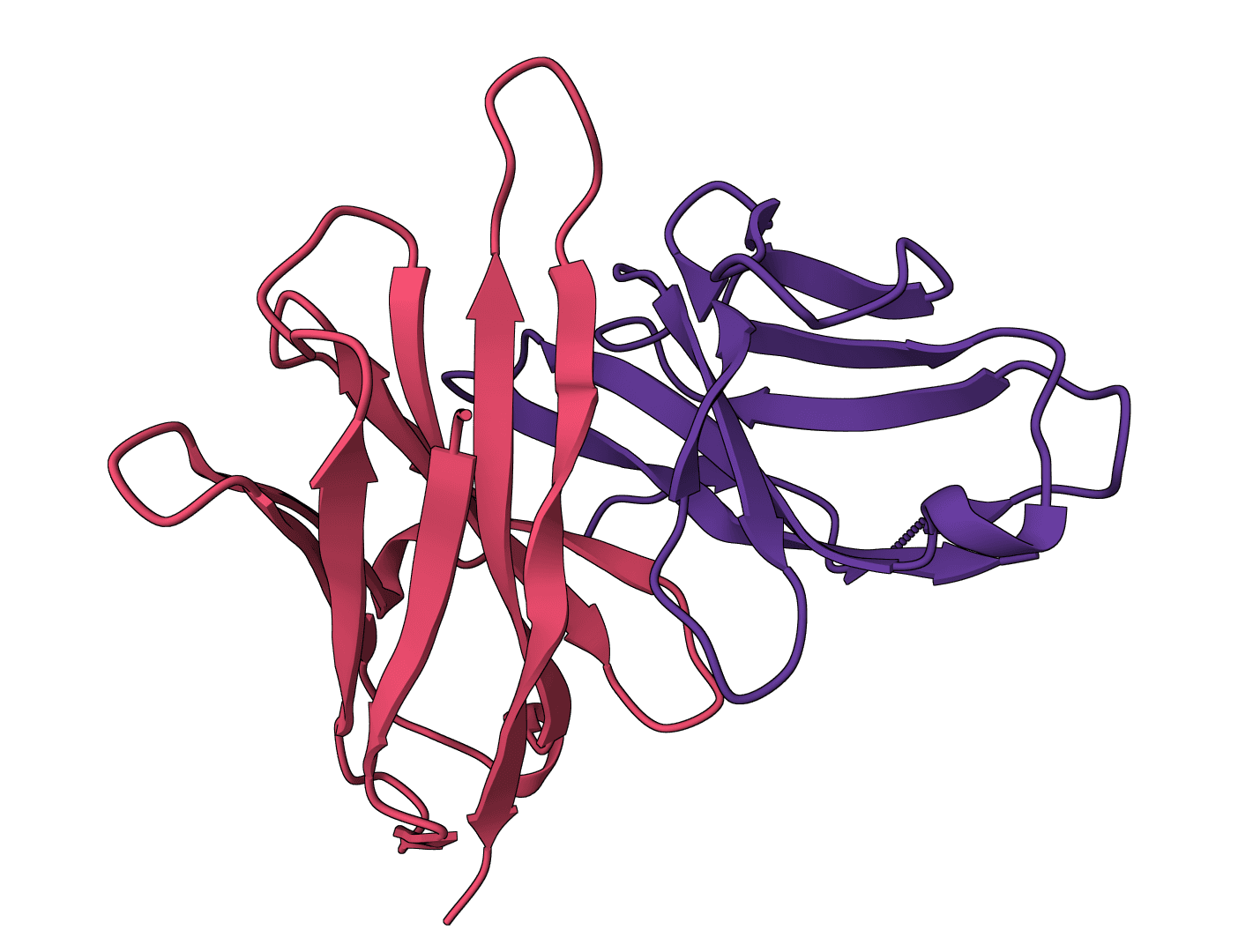
Design antibody CDR regions using equivariant diffusion models for de novo antibody engineering Learn more
Input
DiffAb webserver overview
The DiffAb webserver runs the pinned c3e2966 release to redesign antibody complementarity-determining region (CDR) sequences, structures, or both. It accepts an antibody structure with optional antigen chains and supports independent CDR co-design, coordinated multi-CDR co-design, native-start optimization, fixed-backbone sequence design, and fixed-sequence structure prediction.
Each job returns the generated PDB structures, reference structures, a CDR-sequence table, the exact inference configuration, native metadata, and downloadable files. See How to use DiffAb online for input preparation, mode selection, candidate evaluation, and limitations.
Pricing
DiffAb jobs start at 50 credits. The exact quote is calculated from the selected mode, CDRs, optimization steps, and sample count before submission.
These representative quotes use the default three CDRs (HCDR1, HCDR2, and HCDR3), five samples, and optimization step 4 where applicable:
| Design mode | Credits |
|---|---|
| Co-design selected CDRs independently | 120 |
| Co-design selected CDRs together (sequence + structure) | 50 |
| Optimize selected CDRs (sequence + structure) | 50 |
| Fixed backbone for selected CDRs (sequence only) | 120 |
| Predict selected CDR structures (fixed sequence) | 120 |
Coordinated multi-CDR co-design scales with sample count. Independent co-design, fixed-backbone design, and structure prediction scale with sample count and selected CDR count. Optimization also scales with the selected optimization step totals. Chain IDs, seed controls, and renumbering do not change the quote.
Inputs
| Input | Type | Required | Description |
|---|---|---|---|
| Antibody Structure or Antibody-Antigen Complex (PDB) | PDB | Yes | One .pdb or .ent file up to 50 MiB, uploaded directly or fetched from RCSB. Multi-model files use the first model. An antibody structure is required; antigen chains are optional. |
| Job name | string | No | Optional label used to identify the job in history. |
Settings
Core settings
| Parameter | Type | Default | Description |
|---|---|---|---|
| Heavy chain ID | string | Auto-detect | Optional one-character antibody heavy-chain identifier. Leave blank for automatic antibody-chain detection and Chothia renumbering. |
| Light chain ID | string | Auto-detect | Optional one-character antibody light-chain identifier. Leave blank for automatic detection or for a heavy-chain-only nanobody. |
| Design mode | enum | Co-design selected CDRs together (sequence + structure) | Select independent sequence-and-structure co-design, coordinated multi-CDR co-design, native-start optimization, fixed-backbone sequence design, or fixed-sequence structure prediction. |
| CDRs to design | enum | HCDR1, HCDR2, HCDR3 | Select one or more of HCDR1, HCDR2, HCDR3, LCDR1, LCDR2, and LCDR3. A selected loop absent from the detected antibody produces no variant for that loop. |
| Optimization steps | enum | 4 | Visible only for Optimize selected CDRs (sequence + structure). Select one or more native-start diffusion lengths from 1, 2, 4, 8, 16, 32, and 64; each selected CDR and step combination creates a separate variant. |
| Number of samples | integer | 5 | Generates 1 to 10 samples for each native variant. |
Advanced settings
| Parameter | Type | Default | Description |
|---|---|---|---|
| Use a random seed | boolean | false | Generates a new seed for the job. Enabling the switch hides the reproducible seed field below. |
| Random seed | integer | 2022 | Reproducible seed from 0 to 4294967295. Visible when Use a random seed is disabled. |
| Input is already Chothia-numbered | boolean | false | Skips DiffAb's default AbNumber and ANARCI renumbering. Enable only for a correctly Chothia-numbered structure and provide at least one antibody chain ID because source chain auto-detection is disabled in this mode. |
Outputs
| Artifact | Format | Description |
|---|---|---|
| Generated structures | PDB | Numbered designs such as H_CDR3/0000.pdb, grouped by CDR or optimization variant and shown in the structure viewer. |
| Prepared inference input | PDB | Exact Chothia-renumbered input used for inference when automatic renumbering is applied. |
| Reference structures | PDB | Native reference.pdb and variant reference files such as REF1.pdb, kept separate from generated designs. |
| CDR sequence table | CSV | cdr_sequences.csv with the design name and extracted HCDR1, HCDR2, HCDR3, LCDR1, LCDR2, and LCDR3 sequences. |
| Generated structure archive | TAR.GZ | generated.tar.gz containing only the numbered generated PDB structures. |
| Native run metadata | JSON | metadata.json describing the DiffAb variants and native run. |
| Inference configuration | YAML | diffab_config.yaml containing the exact configuration used for inference. |
| Execution log | TXT | log.txt when the native DiffAb run produces a log. |
Understanding results
The Viewer tab displays generated, prepared-input, and reference PDB files. The CDR sequences tab lists one row per generated structure with columns for the six antibody CDRs, and the Files tab provides every returned artifact for download.
Variant folders identify the CDR or optimization branch that produced a structure. Four-digit sample numbers record generation order only. DiffAb does not return a confidence, affinity, energy, or scientific ranking score.
Related tools
Proteo-R1
Exploratory antibody CDR co-design for antibody-antigen complexes using Proteo-R1 reasoning and raw diffusion. The standard online workflow does not include the framework structure-inpainting assets required for the published-quality target.
RFantibody
Structure-based de novo antibody and nanobody design pipeline combining antibody-tuned RFdiffusion, ProteinMPNN sequence design, and antibody-tuned RoseTTAFold2 filtering.
Genie 3
Generate protein structures and scaffolds with Genie 3, an all-atom SE(3)-equivariant diffusion model. Genie 3 supports unconditional protein generation, motif scaffolding, and hotspot-targeted binder design.
ODesign
All-atom generative AI for designing protein binders. Specify target binding sites and generate diverse binding proteins with fine-grained control over interaction parameters.
ProGen2
ProGen2 is Salesforce Research's protein language model suite for prompt-based de novo protein sequence generation and bidirectional sequence likelihood scoring.
BioPhi
Antibody humanization and humanness evaluation platform from Merck. Sapiens mode uses deep learning trained on the Observed Antibody Space (OAS) to humanize antibody sequences, while OASis mode evaluates humanness using 9-mer peptide search against human antibody databases.
BoltzGen
BoltzGen uses generative diffusion models to design protein, peptide, nanobody, and Fab binders against protein and small-molecule targets.
CoSiNE
Simulate antibody affinity maturation, steer heavy-chain evolution with SARS-CoV binding predictors, constrain mutations to CDR or framework regions, and score paired-antibody variants with CoSiNE likelihoods and optional somatic-hypermutation correction.
ProFam
ProFam-1 is a protein family language model for family-conditioned sequence generation. Provide a protein family in FASTA, A2M, or A3M format and generate new sequences with model likelihood scores for downstream ranking and screening.
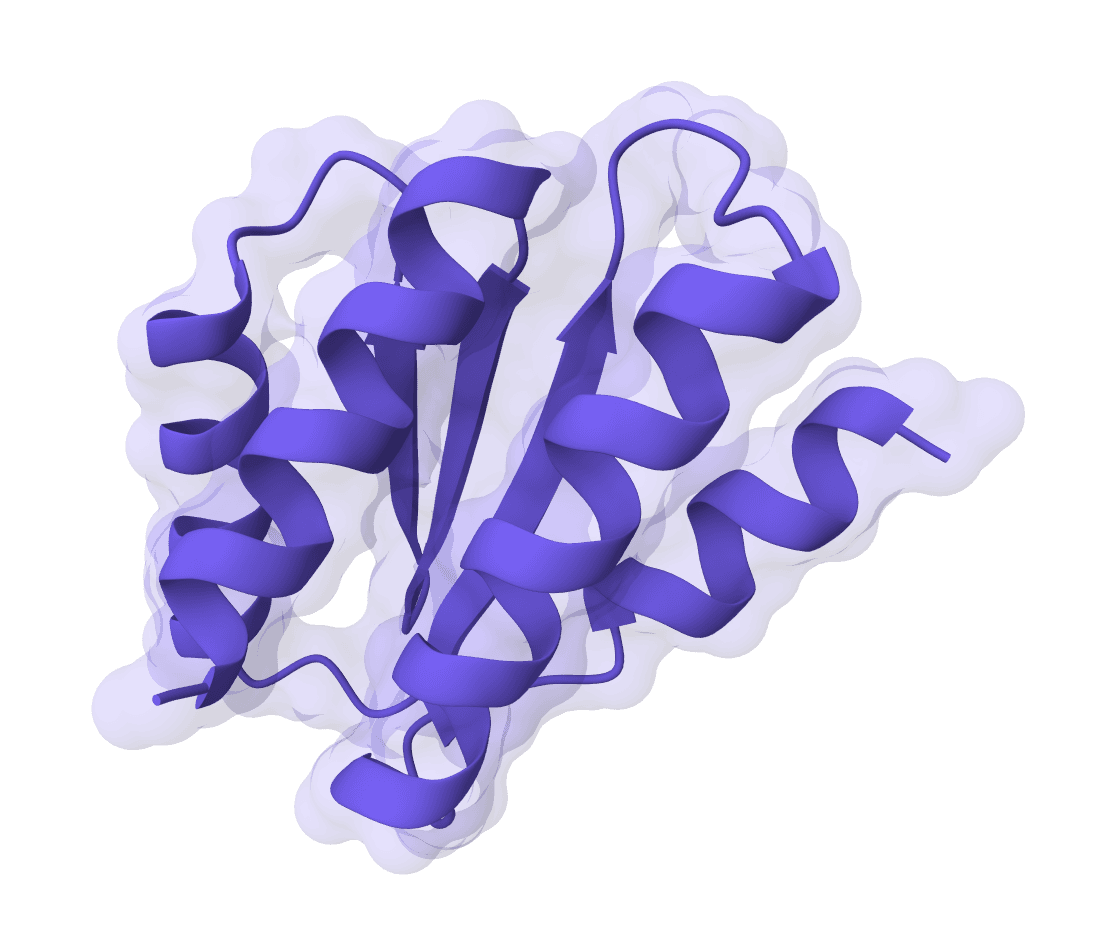
EvoDiff
EvoDiff is a diffusion-based protein sequence generation framework from Microsoft Research. ProteinIQ currently runs the EvoDiff-Seq OA_DM_38M model for unconditional protein generation, motif scaffolding, and user-sequence inpainting.