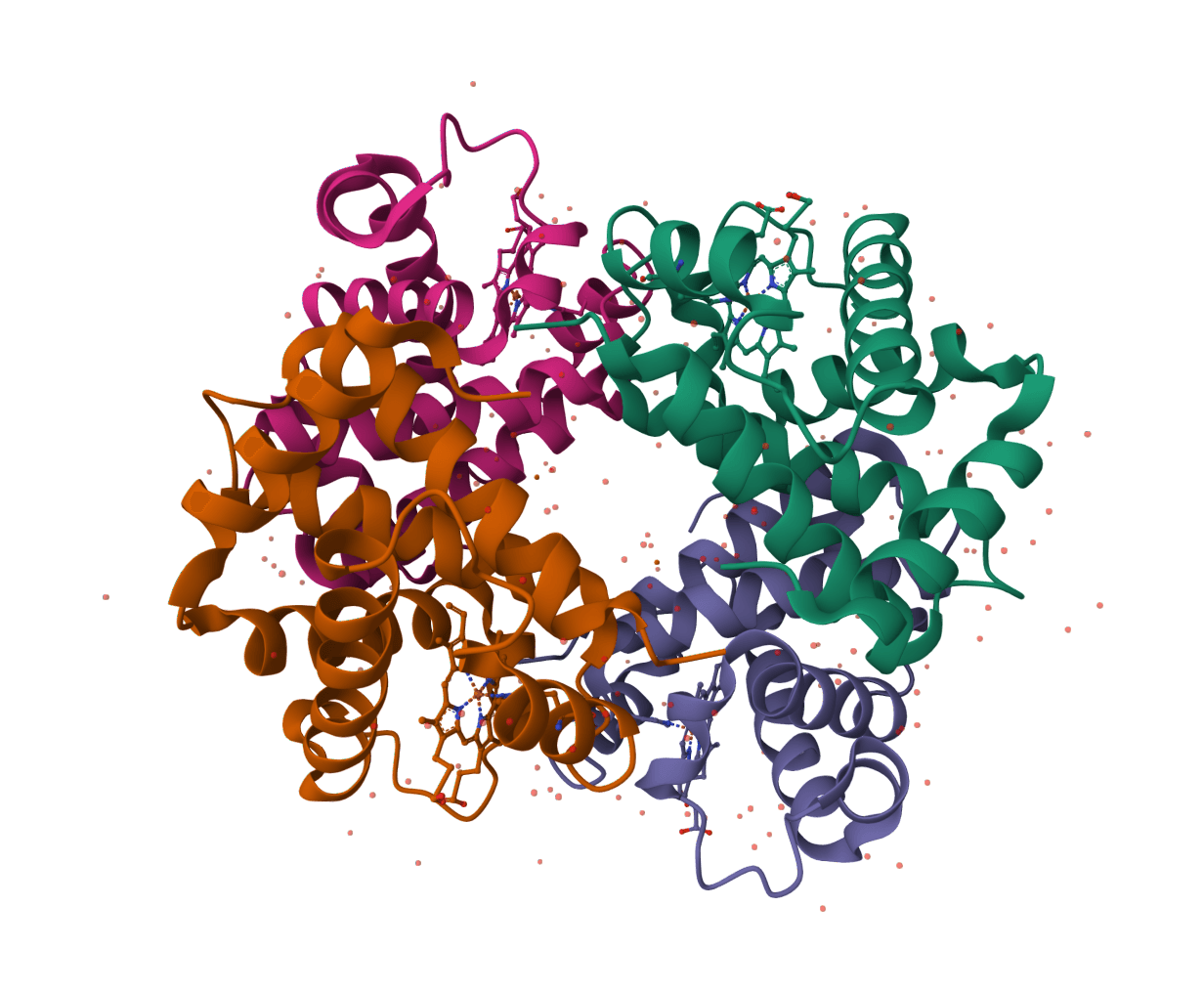
Sharpen and denoise cryo-EM maps. Learn more
Input
Unsharpened MRC/MAP reconstruction or first half-map.
What is DeepEMhancer?
DeepEMhancer performs automatic post-processing of cryo-EM density maps using deep learning. Rather than applying a global B-factor correction like traditional sharpening, it learns a non-linear mapping from raw experimental maps to locally sharpened, masked, and denoised outputs — all in a single step and without requiring an atomic model.
The approach was developed by Sanchez-Garcia et al. at the Spanish National Center for Biotechnology (CNB-CSIC). A 3D U-Net was trained on pairs of experimental cryo-EM maps and their corresponding LocScale-sharpened versions, allowing the network to learn the relationship between noisy input maps and their post-processed targets. On a test set of 20 maps, DeepEMhancer improved local resolution by a median of ~0.4 Å (measured by DeepRes), outperforming both automatic RELION B-factor correction and manually tuned EMDB depositions.
How does DeepEMhancer work?
The network uses a 3D U-Net architecture with three downsampling and three upsampling blocks connected by skip connections. Input maps are divided into overlapping 64×64×64 voxel cubes, each processed independently on the GPU, then reassembled into the full output volume.
Training targets were not simulated from atomic coordinates directly. Instead, LocScale — which requires an atomic model — was used to generate sharpened reference maps from 107 experimental entries. The network learned to reproduce LocScale-quality output from experimental maps alone, effectively distilling model-based sharpening into a model-free tool.
When two half-maps are provided, DeepEMhancer averages them before normalization and inference. Half-maps are the source project's preferred input because the models were trained on half-map data. With only a single full map, automatic noise estimation works well for most cases but can struggle with hollow or fibrous proteins.
How to use DeepEMhancer online
ProteinIQ runs DeepEMhancer on GPU infrastructure with no software installation or Python environment setup required.
Inputs
| Input | Description |
|---|---|
Cryo-EM Map | MRC or MAP file of the unprocessed reconstruction. Must contain a readable 3D density grid with positive voxel sizes and must not already be sharpened. If the reconstruction is masked, also provide the corresponding normalization mask. Up to 500 MB. |
Half Map 2 | Optional second half-map (MRC/MAP). It must have the same grid dimensions and voxel size as the first half-map. |
Normalization Mask | Optional MRC/MAP mask for the source-supported mask-normalization mode. It must match the input grid and voxel size, requires tightTarget, and cannot be combined with manual noise statistics. |
Half-map input is recommended when available. The first half-map goes in the main input slot; the second in the optional slot.
Settings
| Setting | Description |
|---|---|
Processing model | Controls masking behavior: tightTarget (default), wideTarget, or highRes. See below. |
Batch size | Number of map chunks processed in parallel on the GPU (1–12, default 6). Reduce if processing fails on very large maps. |
Sampling rate override | Optional Å/voxel value passed to --samplingRate. Leave empty to use the MRC/MAP header. |
Noise mean and Noise standard deviation | Optional manual --noiseStats normalization. Supply both values together; the standard deviation must be positive. |
Connected-component cleaning strength | Optional value between 0 and 1 passed to --cleaningStrengh. Leave empty to preserve the source default of no cleanup. |
Use manual noise statistics when automatic normalization is unreliable, such as for hollow or fibrous particles. The optional normalization mask provides the source project's alternate masked-input path and selects its dedicated masked checkpoint.
Processing models
| Model | Best for | Behavior |
|---|---|---|
tightTarget | Most maps | Tight masking around the macromolecule. Default choice. |
wideTarget | Maps where tightTarget clips peripheral density | More permissive mask that preserves surrounding features like detergent belts or flexible domains. |
highRes | Maps better than ~4 Å overall resolution | Trained on a high-resolution subset (<4 Å). Produces more detail but noisier output than the other models. |
If tightTarget removes density that should be kept, try wideTarget. Use highRes only when overall resolution justifies it — on lower-resolution maps it tends to amplify noise without meaningful enhancement.
Output
The result is one post-processed MRC map combining sharpening, masking, and denoising. ProteinIQ also returns the applied model, normalization mode, batch size, input-map metadata, exact DeepEMhancer source revision, and a captured execution log. Download the MRC file and open it in visualization software such as ChimeraX or Coot for inspection. Native processing is limited to 55 minutes per job.
The Run log summarizes the selected settings, normalization mode, and outcome. Download run.log for this summary or the separate execution log for DeepEMhancer's diagnostic output.
Limitations
- No ligands or post-translational modifications in training data: The network was trained exclusively on protein density. Ligands, glycans, and modified residues may be inaccurately represented in the output.
- Pre-sharpened maps are not supported: Input should be an unsharpened reconstruction. For masked reconstructions, provide the corresponding normalization mask so DeepEMhancer uses its dedicated masked model.
- Noise estimation on unusual morphologies: Hollow or fibrous structures can confuse automatic noise estimation when only a full map (no half-maps) is provided.
- Resolution is not created from nothing: DeepEMhancer enhances existing signal but cannot recover information absent from the data. Visual improvement does not always correspond to genuine resolution gain.
Related tools
SuperWater
Predict protein hydration sites from a structure using a diffusion model with ESM features and a confidence-filtering head.
AllMetal3D
Predict metal and water binding sites in protein structures using 3D convolutional neural networks (AllMetal3D + Water3D).
LocScale
LocScale performs physics-informed local sharpening of cryo-EM density maps using half-maps or full MRC/MAP volumes, with optional mask and reference-map inputs.
MolProbity
Validate protein structure quality with all-atom contact analysis, Ramachandran plots, rotamer assessment, and geometry checks.
PDBsum
Generate a downloadable PDBsum structural summary report archive for a single protein structure.
pyRMSD
Calculate pairwise RMSD matrices for PDB structure ensembles with pyRMSD, including the condensed matrix and source statistics files.
DR-BERT
DR-BERT is a compact protein language model that predicts intrinsically disordered regions (IDRs) in proteins. It outputs per-residue disorder probability scores (0–1) from amino acid sequences, enabling fast and accurate annotation of disordered regions without structural data.
AF-Cluster
Cluster protein multiple sequence alignments with the source AF-Cluster DBSCAN workflow to prepare subgroup MSAs for alternative-conformation prediction.
Aggrescan3D
Static-mode Aggrescan3D analysis for per-residue aggregation propensity from a single protein structure.
DockQ
Assess docking model quality by comparing predicted complexes against native references. DockQ v2.1.3 supports protein, nucleic-acid, and supported small-molecule interfaces with native metrics.